During processes like mercerizing, high-speed chemical padding, and continuous drying, even a small variation of 2°C to 3°C in your process liquid can completely ruin the batch. It causes uneven chemical absorption, colour shade variations from batch to batch, and weakens the fabric structure. This results in heavy rejection rates and directly cuts down your mill's monthly profits.
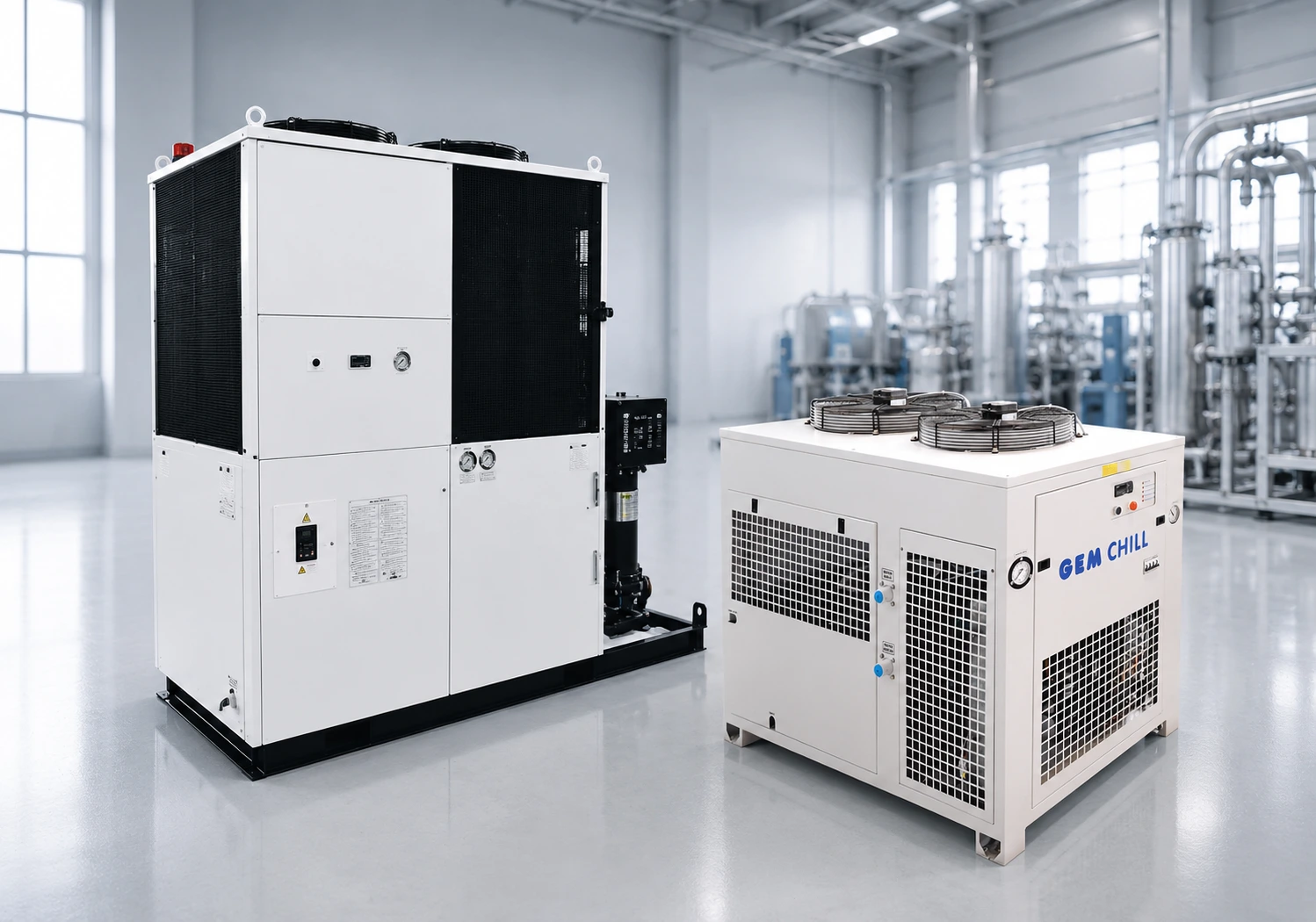
To solve this exact issue, Gem Orion has engineered the GKE & CHT series Industrial Chillers. Built natively in India utilizing precise Japanese cooling architecture, these process chillers provide the exact thermal stability that the modern processing lines demand.
The Hidden Cost of Poor Temperature Control in Textile Mills
In a typical wet processing unit, large volumes of water and chemical mixture are continuously circulated. As the fabric runs through the rollers at high speeds, mechanical friction and steam heating lines raise the chemical bath temperature. If this heat is not adequately removed continuously, the chemical characteristics change completely.
For example, if the liquid temperature crosses the set point in a padder or a dye bath, the chemicals react too fast with the fibres. This causes patchiness across the width of the fabric. Many mills try to fix this by manually adjusting cooling water valves or using oversized, non-regulated cooling units. This trial & error leads to huge energy bills and high maintenance shutdowns. Even then getting the desired outcome is uncertain.